
Passport and visa photo requirements by country
EntryNest Editorial Team · Last reviewed
A rejected photo is one of the most common reasons a passport or visa application is delayed, and almost every rejection comes down to a measurement, a background or a shadow. This page explains what photo authorities actually check, then lets you look up the specification for any country.
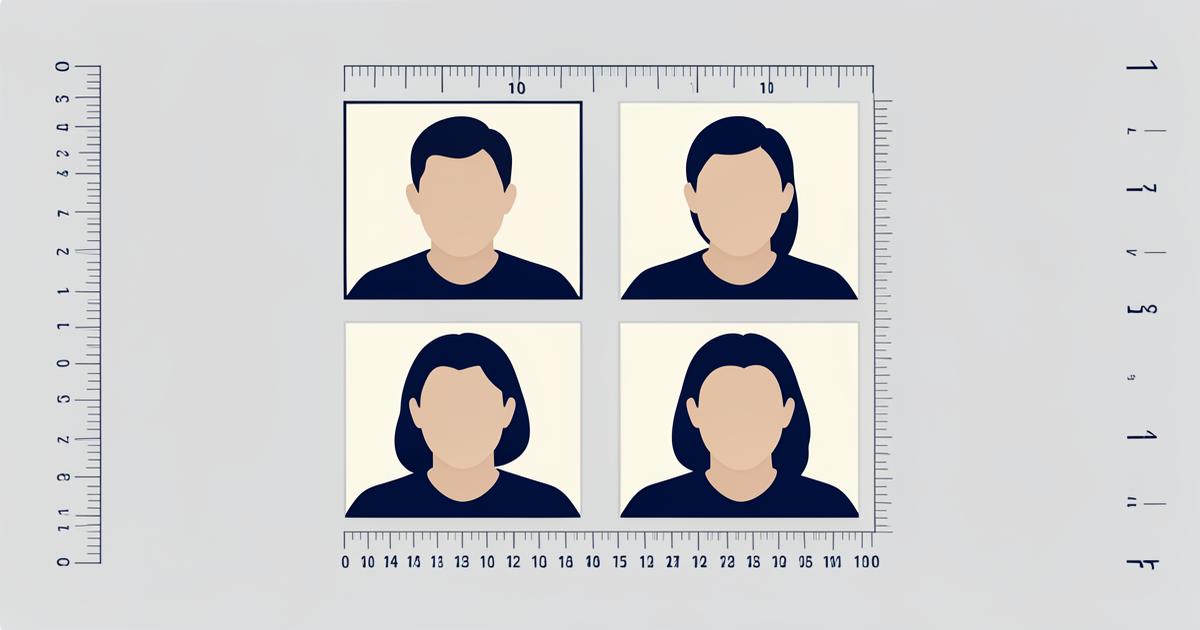
What every passport photo is judged on
Wherever you apply, the checks are similar: the printed size in millimetres, the head height from chin to crown, a plain evenly lit background, a neutral expression with the mouth closed, and a recent photo that still looks like you. Digital uploads add resolution and file-size limits on top.
The differences between countries are usually about numbers rather than principles. A 35 × 45 mm photo is standard across Europe and much of Asia, while the United States and India use a 2 × 2 inch square. Head height ranges are what catch most people out, because a photo that looks fine can still sit a few millimetres outside the allowed band.
- Size in millimetres or inches, measured on the printed photo
- Head height from the bottom of the chin to the top of the head
- Plain background — white, off-white, light grey or light blue depending on the country
- Even lighting with no shadows on the face or behind the head
- Neutral expression, eyes open and clearly visible, facing the camera
- Taken within the last six months and unedited
Official requirements versus general guidance
Only the issuing authority decides whether a photo is acceptable. Where we hold a published national specification, the lookup below shows it and names the authority it comes from. Where we do not, it shows the general ICAO-aligned guidance most machine-readable passports follow and says so plainly.
We never invent a national figure. If a country is not listed with an official specification, check the passport office, foreign ministry or the embassy handling your application before you print anything.
Printed photos and digital uploads are different jobs
Printed photos are cut to millimetres and glued or stapled to a form. Digital uploads are checked by software against pixel dimensions, file type and a maximum file size, and many portals silently compress or reject anything outside the range.
If your application has both an online form and an in-person appointment, prepare both versions from the same session. Re-shooting later rarely matches the original lighting.
Where EntryNest fits in
EntryNest is not a photo service and not an issuing authority. It is a reminder system: add your passport, visa or residence permit expiry date once and it tells you months ahead, while there is still time to book a photo, gather documents and apply without paying for an urgent appointment.
The photo is the small task at the end. The date is the thing people forget.
Photo requirements by country
Choose a country to see the passport and visa photo specification that applies there, what the photo is checked against, and where the rules come from.
🇺🇸 Passport photo requirements — United States
Official requirementSpecification published by U.S. Department of State — Bureau of Consular Affairs. Always confirm on the authority's own site before you submit, as details can change.
- Print size
- 51 × 51 mm (2 × 2 in)
- Head height (chin to crown)
- 25–35 mm
- Background
- Plain white
- Glasses
- Not allowed — remove glasses
- Headwear
- Only for religious or medical reasons, and the full face must stay visible
- Expression and pose
- Neutral expression, mouth closed, eyes open, facing the camera squarely
- Digital resolution
- 600 × 600 – 1200 × 1200 px
- File size
- Up to 10 MB (JPEG)
Printed photo or digital upload?
Printed photos are judged in millimetres, digital uploads in pixels and file size. The same image can pass in print and fail online if the resolution or file weight is wrong, so prepare the version the application actually asks for.
Common reasons photos are rejected
- • Wrong dimensions or head height outside the allowed range
- • Shadows on the face or behind the head
- • Reflections on glasses or shiny skin
- • Smiling, open mouth or an unnatural pose
- • Hair or frames covering the eyes or eyebrows
- • Blurry, pixelated or heavily compressed images
- • A photo older than six months
- • Cropped too tightly, cutting the top of the head
- • Patterned, textured or coloured background
- • Retouching, filters or beauty modes that alter the face
Check your photo
- United States passport photo size and rules on ImageGates
- ImageGates Passport Photo Checker
- ImageGates Visa Photo Checker
- ImageGates Photo Studio
ImageGates links are affiliate links. We may earn a commission at no additional cost to you. EntryNest is not an issuing authority and does not approve photos.
Passport and visa photo FAQ
- What is the most common passport photo size?
- 35 × 45 mm is the most widely used size, covering the Schengen area, the United Kingdom, Australia and much of Asia and Africa. The United States and India use a 2 × 2 inch (51 × 51 mm) square instead.
- Can I smile in a passport photo?
- No. Almost every authority requires a neutral expression with the mouth closed, because facial-recognition systems compare fixed landmarks. A slight smile is the single most common reason a photo is sent back.
- Can I wear glasses?
- Increasingly no. The United States, the United Kingdom and several other countries no longer accept glasses at all. Where they are allowed, the eyes must be fully visible with no glare, no tint and no thick frames.
- Is headwear allowed?
- Only for religious or medical reasons, and the full face from the bottom of the chin to the top of the forehead must stay visible with no shadows.
- How recent does the photo have to be?
- Six months is the usual limit, and it must reflect your current appearance. If your look has changed significantly — a beard, very different hair, weight change — take a new one even if the old one is recent.
- Can I take the photo myself with a phone?
- In many countries yes, provided the lighting is even, the background is plain and the crop matches the specification. A photo checker that measures the crop and head height before you submit is the safest way to confirm it.
Related pages
Editorial & accuracy
EntryNest guides are written and reviewed by the EntryNest editorial team. We focus on accuracy and practical usefulness, and we revisit time-sensitive information to keep it up to date. Rules set by governments, airlines, insurers and other organisations can change without notice. Always confirm current requirements with the relevant official source before you act.
Travel & preparation
Helpful services for getting ready for your next trip.

Some links are affiliate links. We may earn a commission at no additional cost to you.
Renew before it becomes urgent
Add your passport, visa or permit expiry date and EntryNest reminds you months ahead — enough time for photos, forms and an appointment.